The Legacy of Her Harp: Augusta Savage’s Enduring Influence
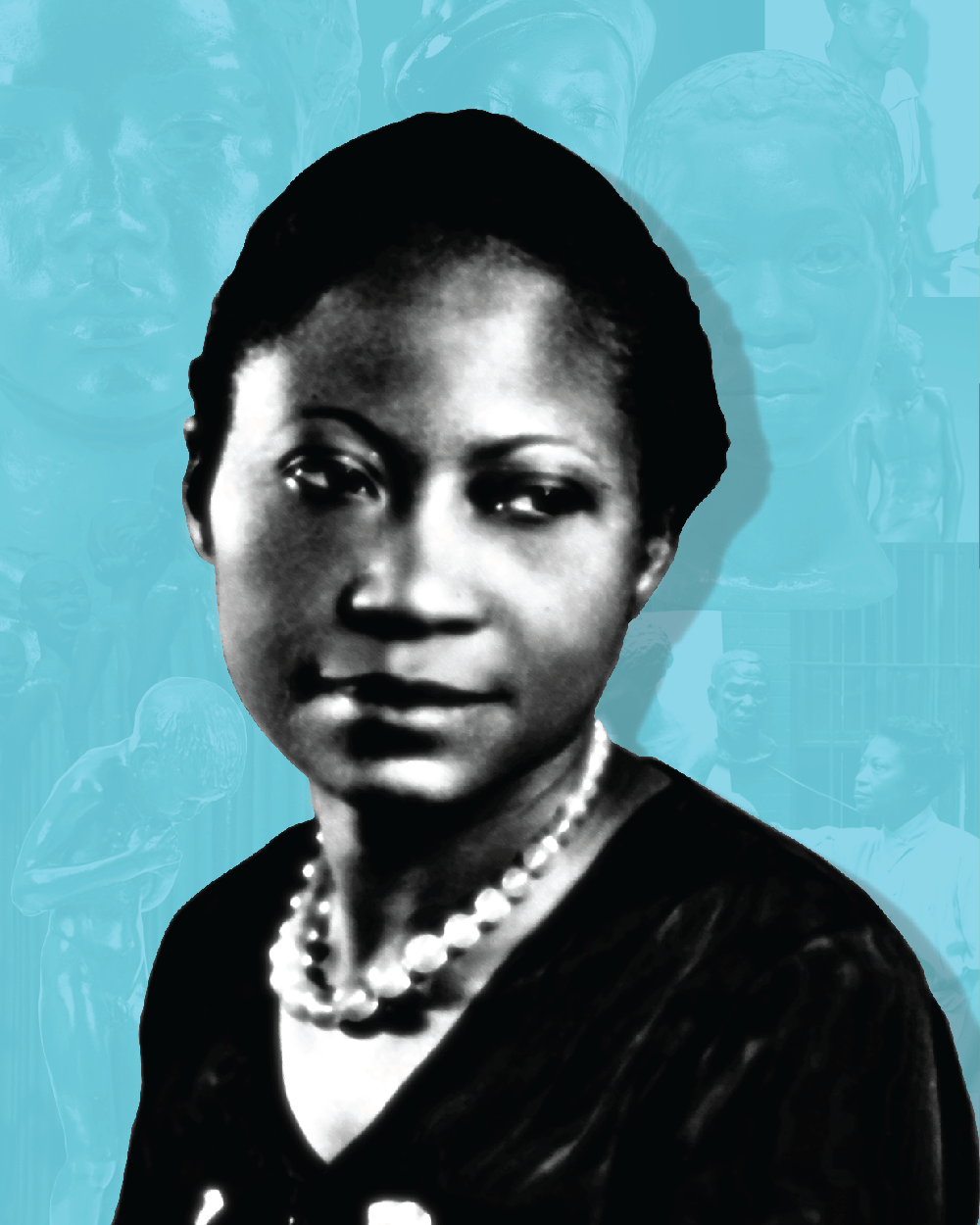
Augusta Savage was not just a sculptor—she was a revolution wrapped in clay and bronze. A woman of vision and fire, she shaped not only figures but futures, carving space for Black artists in an art world that often sought to silence them. From the Harlem Renaissance to the present day, her work and her fight for artistic equity continue to resonate.
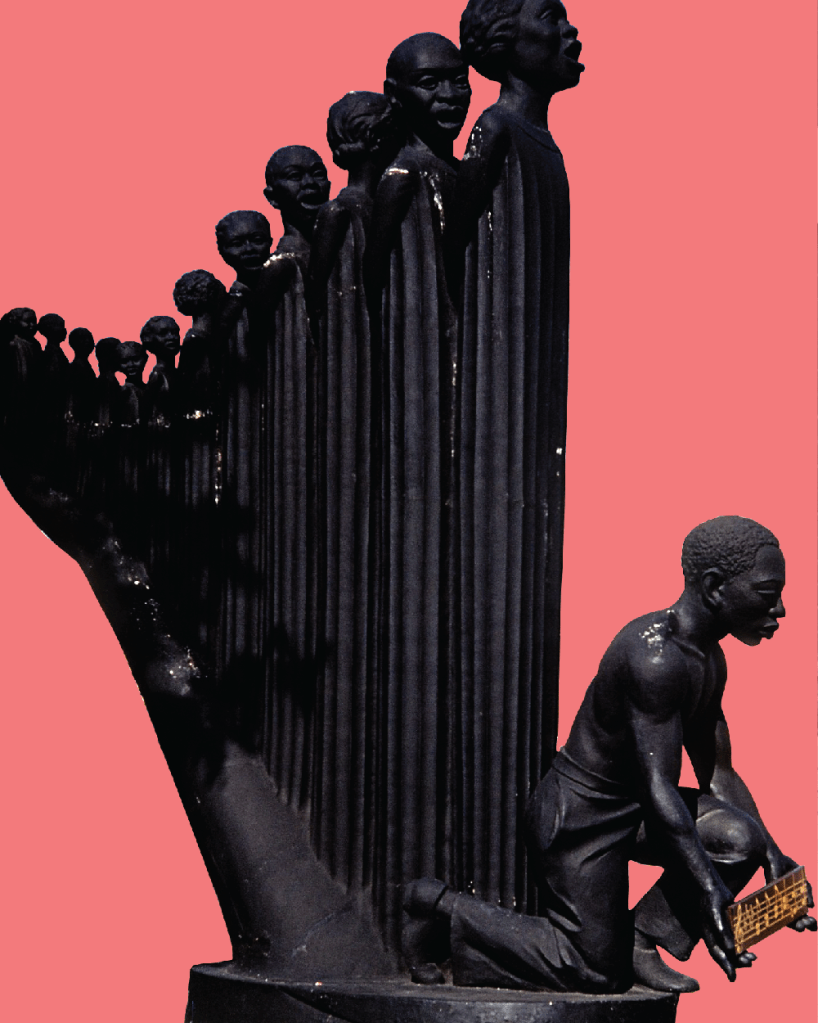
At the heart of her legacy is The Harp, a sculpture inspired by Lift Every Voice and Sing, a song often called the Black National Anthem. Though the physical work no longer exists, its message endures: art is a weapon, a hymn, a force of liberation.
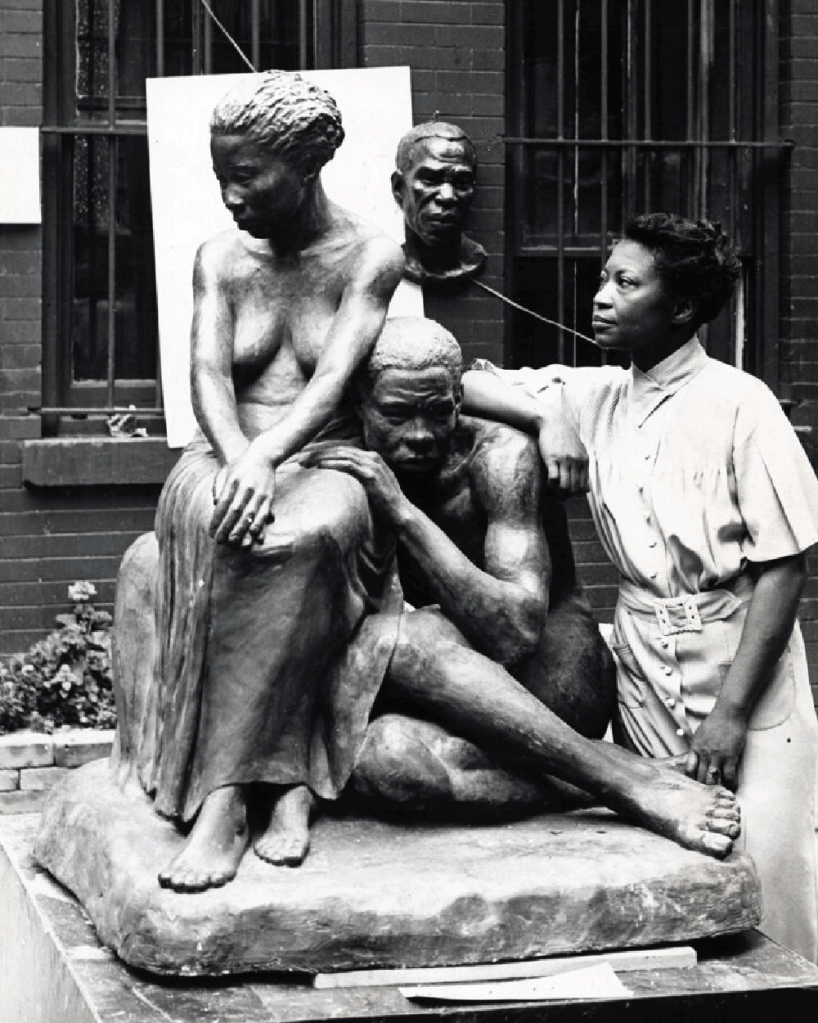
She’s pictured above with her 1938 sculpture Realization. New-York Historical Society
A Sculptor Born of Struggle
Born in 1892 in Green Cove Springs, Florida, Augusta Christine Fells Savage discovered her artistic calling as a child. She sculpted figures from the red clay of her hometown, driven by a natural talent that could not be ignored. Yet, her father, a minister, saw her gift as sinful, punishing her for pursuing it.
But oppression breeds resilience. Savage did not abandon her passion. Instead, she nurtured it in secret, refining her craft until it became undeniable.
Her break came when she was accepted into the Cooper Union for the Advancement of Science and Art in New York City. Out of hundreds of applicants, she was one of the few selected—and she was so skilled that the school waived her tuition. Yet, even with talent and education on her side, racism remained an immovable barrier.
In 1923, Savage applied for a prestigious summer program in France, an opportunity that had the potential to transform her career. She was denied, not for lack of skill, but because of her race. The rejection letter, though polite, echoed centuries of exclusion.
But Augusta Savage was never one to bow to rejection. Instead of retreating, she fought back—publicly calling out the discrimination. The incident exposed the racial barriers in the art world, forcing institutions to confront their biases. Though she did not get to study in France that year, she had already begun the work of tearing down walls.
The Harp: A Monument to Black Excellence
Of all her works, The Harp remains the most powerful. Commissioned for the 1939 New York World’s Fair, it was meant to be a celebration of African American culture. But Savage didn’t just create a sculpture—she crafted a manifesto in bronze.
Inspired by Lift Every Voice and Sing, she designed a massive piece that reimagined the human body as an instrument of music and freedom. The sculpture depicted twelve Black singers standing in a line, their bodies forming the strings of a harp, with a towering hand at the base acting as the support. A young boy knelt in front, representing the song’s enduring legacy in the next generation.
It was a triumph. Tens of thousands of people saw it, felt it, understood it. But despite its impact, The Harp suffered the same fate as much of Savage’s work—it was not cast in bronze due to financial constraints. When the World’s Fair ended, the piece was destroyed.
“Though The Harp no longer stands, its music plays on—in every artist who refuses to be silenced, in every sculptor who shapes history with their hands, in every Black child who sees Augusta Savage’s name and knows that their voice, too, deserves to be lifted.”
Yet The Harp refuses to be forgotten. It lives in the minds of those who witnessed it, in the black-and-white photographs that survived, and in the artists who carry Savage’s vision forward. It serves as both a testament to her brilliance and a reminder of how Black artists have been systematically erased, their works discarded even as they shape the cultural landscape.
More Than an Artist: A Builder of Legacies
Savage’s hands did more than mold clay—they built institutions. Recognizing that opportunities for Black artists were rare, she dedicated herself to mentoring the next generation. In 1932, she founded the Savage Studio of Arts and Crafts in Harlem, where she trained young artists who would later become legends in their own right—Jacob Lawrence, Norman Lewis, and Gwendolyn Knight among them.
Her impact extended even further when she became the first Black woman to establish an arts gallery in Harlem, the Salon of Contemporary Negro Art. It was a radical act: a space where Black artists could exhibit their work without the limitations imposed by white-controlled galleries.
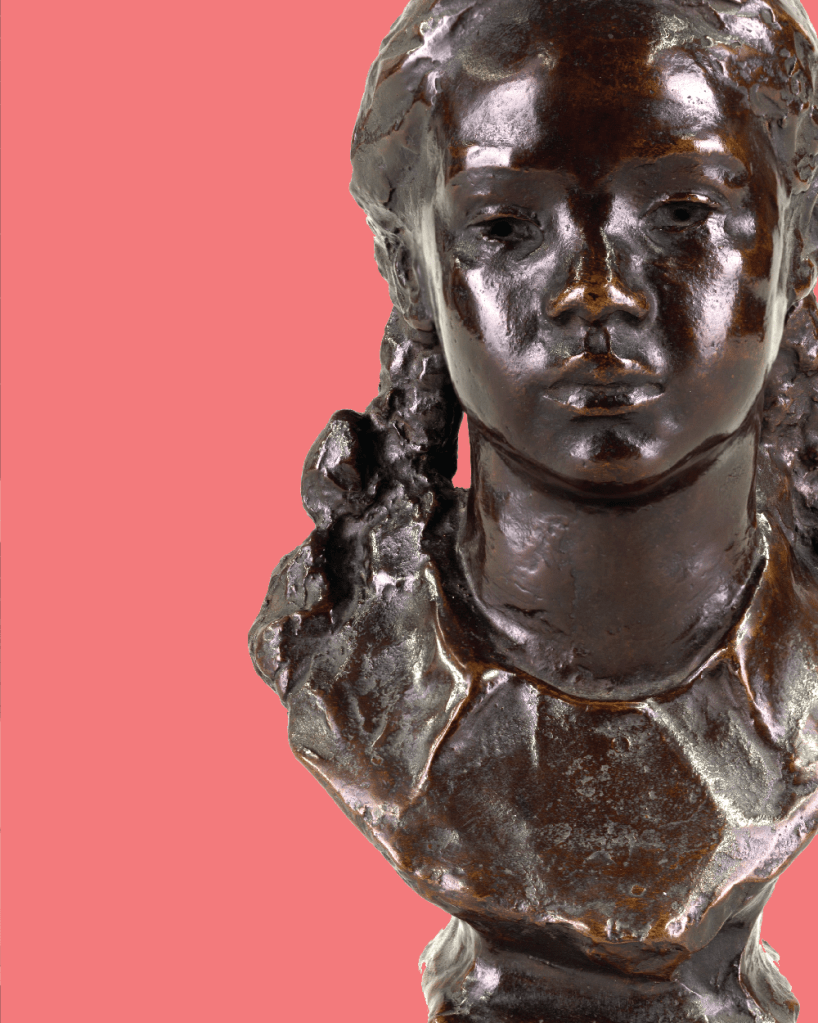
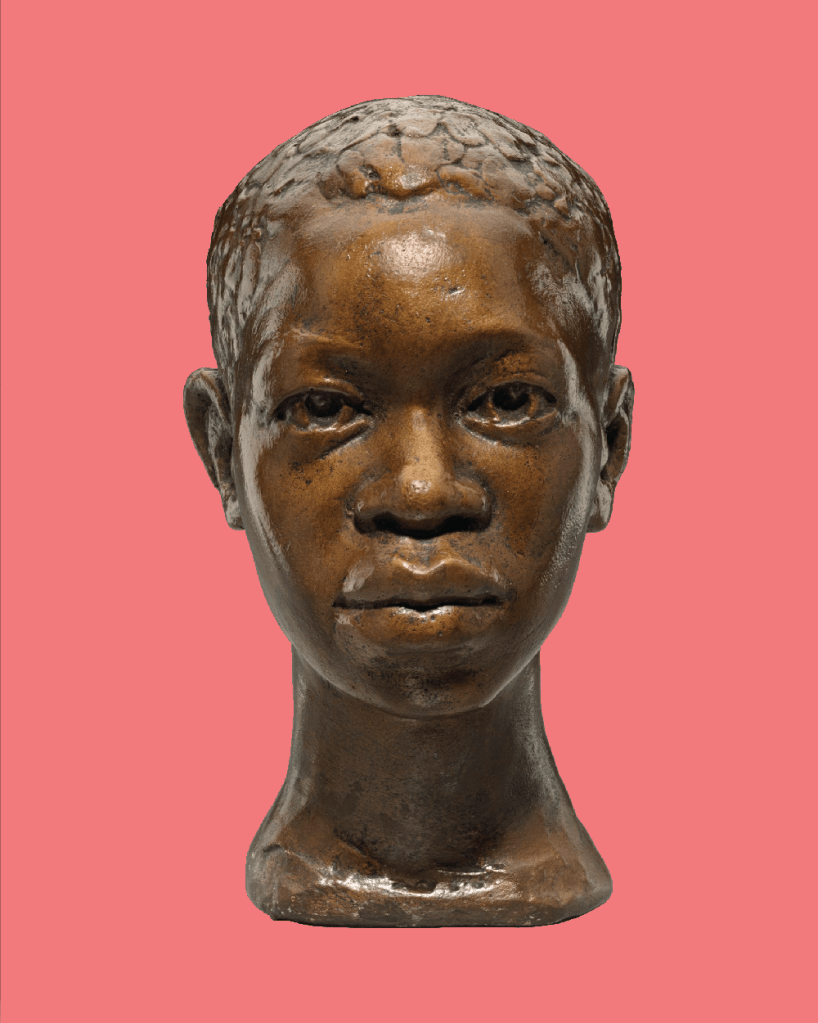
Title: Untitled (Girl with Pigtails)Title: GeminTitle: Portrait Head of John HenryTitle: The Harp
Despite her contributions, Augusta Savage faced financial struggles throughout her life. Unlike her contemporaries, she never amassed great wealth or institutional support. By the 1940s, she had largely withdrawn from the art world, retreating to a quieter life in upstate New York. But even in solitude, she continued to create, sculpting not for fame or money, but because it was her truth.
The Lasting Echo of Her Harp
Augusta Savage passed away in 1962, leaving behind a body of work that was as ground-breaking as it was under appreciated in her time. Today, she is celebrated as a pioneer, a warrior, a sculptor who carved against the grain of history.
Her story is one of resistance. She was denied opportunities, her greatest works were destroyed, and yet she persisted. Through her students, her influence grew. Through her defiance, doors opened. Through her art, a message remains: we are here, we create, we endure.
Though The Harp no longer stands, its music plays on—in every artist who refuses to be silenced, in every sculptor who shapes history with their hands, in every Black child who sees Augusta Savage’s name and knows that their voice, too, deserves to be lifted.



 Jake Black Fine Art Magazine
Leave a comment